 Harro Krog
Some experiences change you gradually. Copenhagen changed me in a matter of days.
In March 2025 I traveled to Copenhagen to participate in the Disability Tech x Microsoft Hackathon. What I expected was a weekend of coding and pitching. What I got was a complete shift in how I see myself.
The Hackathon
Our team built CuePath — an accessible transit routing engine for Denmark. The concept: help wheelchair users, people with strollers, or anyone with mobility constraints navigate public transit when elevators break, stairs are unavailable, or station layouts make certain routes impassable. Standard routing apps treat train stations as a single point on a map. CuePath mapped every elevator, staircase, and pathway so routes were actually navigable, not just theoretically possible.
The team dynamics were challenging. The idea was only half-formed at the start, and I would not call the execution flawless. But we iterated fast, presented with conviction, and — to our genuine surprise — we won.
The project has since been discontinued. Accurate in-station routing requires manually surveying every station, the addressable market willing to pay for accessible routing in Denmark is very small, and one Google Maps update adding elevator status would make it redundant overnight. The code remains open-sourced for anyone who wants to build on it.
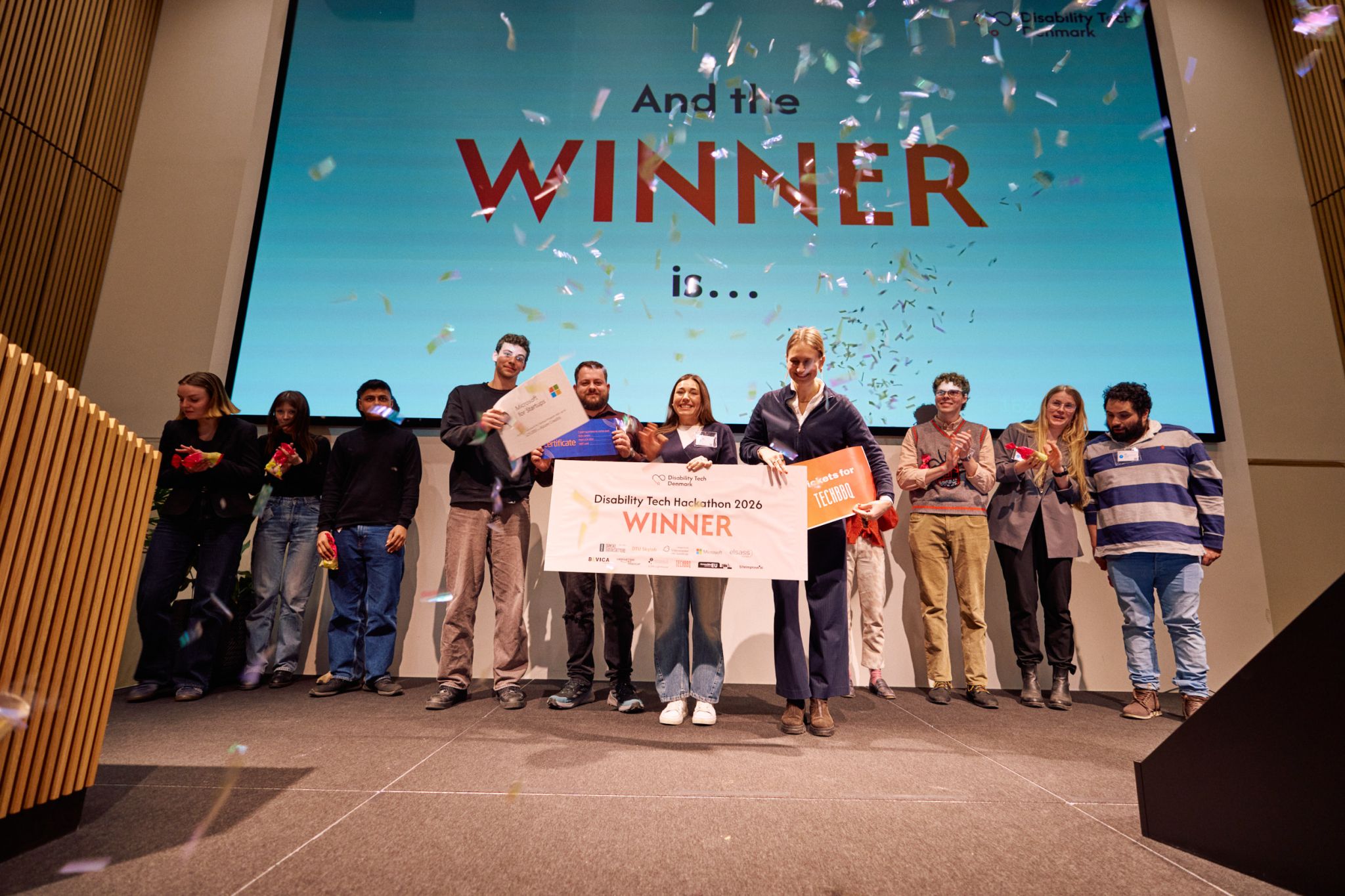
Objectively, winning a hackathon of this caliber should feel significant. Disability tech is a massive and meaningful space. Microsoft was involved. The competition was strong. And yet, what struck me most was not the result itself but the psychological effect it had. Winning gave me a kind of permission I had never granted myself: the permission to believe I belonged in rooms like that.
The People
What made Copenhagen truly transformative, though, happened outside of the hackathon venue.
I was staying at a hostel and finally worked up the courage to sit down at what I thought was the solo traveler table. It turned out to be a large friend group — a crew of architects from Ireland, all roughly 23 to 30, traveling together. They were warm, funny, and immediately welcoming. I never actually clarified that I had mistaken them for strangers eating alone. It did not seem to matter.
What followed were three days of dinners, bars, and conversations that felt effortless in a way social interaction rarely had for me. Copenhagen lends itself to this — clubs and bars distributed across the city rather than concentrated in a single district, a walkable culture that makes every evening feel like an adventure through different neighborhoods.
On my last night, they helped me celebrate my birthday at a karaoke bar. I sang. It was, by any objective measure, terrible. But it was the kind of terrible that only happens when you stop calculating how others perceive you. For the first time in a long while, I was not performing confidence — I was simply present.
Why It Mattered
It is difficult to articulate why a few days can reshape how you move through the world. But context matters.
For a long time, social situations felt like something to survive rather than enjoy. The idea of sitting down with strangers and just being myself was not something I could do naturally.
Copenhagen broke that pattern. Not because anything dramatic happened, but because I proved to myself — through small, repeated acts of putting myself out there — that I could connect with people, and that the version of myself I had been afraid to show was actually the one people responded to.
The hackathon win gave me professional confidence. The people I met gave me personal confidence. Together, they created a momentum that carried forward into the weeks and months that followed. Conversations became easier. Approaching new people stopped feeling like a risk assessment. I started seeing social situations as opportunities rather than threats.
Looking Back
The social media posts about our win did not generate the resonance I had hoped for. CuePath is discontinued. None of that diminished what Copenhagen gave me.
Sometimes growth is not about external validation. Sometimes it is about sitting at the wrong table, singing badly in front of strangers, and realizing that the person you are becoming is someone worth being.